
Salt of Salt-N-Pepa Talks 50 Years of Hip Hop, New Album & More
Salt of Salt-N-Pepa Talks 50 Years of Hip Hop, New Album & More
- Hip hop went from being feared as society's downfall to dominating mainstream culture.
- Salt worries content has become too explicit, desires balance and representation of women's diverse talents.
- She encourages women to celebrate their intelligence, innovation and spirit, not just physical attributes.
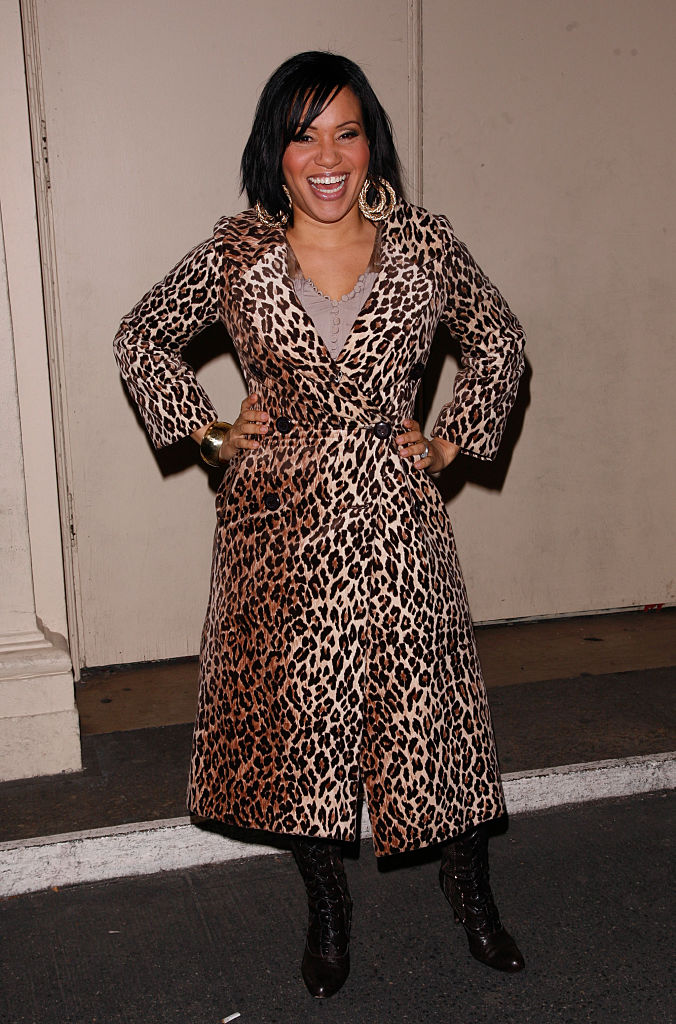
At the BET Awards 2026, Salt of the legendary Salt-N-Pepa pulled up and gave us one of the realest conversations of the night. The icon spoke openly about a culture she helped build—where it started, how far it has traveled, and where she hopes it goes next. It was honest, celebratory, and rooted in decades of lived experience.
50 Years of Hip Hop—and the People Who Doubted It
Few artists can speak to hip hop’s journey like Salt. She remembers a time when the genre was treated like a problem instead of a movement.
“I remember when they were saying hip hop was going to be the end of society,” she said. She also pointed back to one of the era’s defining battles. “Do you not remember when Tipper Gore… she was like, you have to put explicit stickers on all things hip hop because it is going to destroy this country.”
Half a century later, those fears look almost laughable. What was once dismissed became one of the most powerful cultural forces in the world.
From “The End of Society” to the Center of Everything
The same genre critics warned about now drives the culture in every direction.
“Now you can’t turn on TV without a commercial featuring hip hop,” Salt noted. “It’s in every sport. They even use it to sell clothes, any merchandise. If it doesn’t have hip hop, they think it’s not going to sell.”
From fashion to music to food to podcasts, hip hop touches it all. What people once feared would ruin children is now the soundtrack of the mainstream—proof of the genre’s staying power and the community that carried it.
A Call for Balance and More Voices
Salt celebrates the wins, but she’s also honest about her concerns. She feels the content has drifted.
“It has gone a little left, content is concerned,” she said. “It can swing to the middle a little.”
She remembers when the culture made room for many kinds of women. “When we were coming up, it was such a diverse amount of voices.” She pointed to her own group bringing “fashion and femininity to hip hop,” to Lil’ Kim’s bold sexuality, to Queen Latifah as “the queen, the innovator,” and to Lauryn Hill as “the consciousness.”
Her message isn’t about silencing anyone. It’s about space. “There’s a lot of women out there that deserve to be put on, deserve to be celebrated, that have a diverse amount of things to say.”
The Social Media Pressure to Go Further
Salt came up in a generation that understood restraint. “You walked up to the line, but you didn’t necessarily have to step over it,” she said.
Today, she sees a different pull. While she’s careful not to blame social media for everything, she recognizes its influence. “I almost feel like now it’s how far can I go so that I either get more likes, more spins, more attention. At what point do we say too much is too much?”
It’s a fair question—and one a lot of longtime fans have been asking too.
A Real Worry for Young Women
For Salt, this conversation goes beyond music. It’s about the young women watching and listening.
“If your role models are mainly talking about how they look and what they have between their legs, then that becomes an imprint on your value as a woman as you grow up,” she said.
Her hope is simple and powerful. “I would like us to celebrate our intelligence, our way of being innovative, our spirit, our hearts—what we have to offer beside what’s in between our legs.”


The Lost Art of Romance
Salt also mourns something the music used to carry: connection.
“Back in the day… even if it was hip hop, it was about romancing,” she said. “And now it’s like, how quickly can we get to it?”
She spoke to the deeper cost of that shift. “We all know that when we’re sharing bodies and spirits and all of that, how do you just keep moving on?” For her, the music has become “saturated with materials,” and that loss of intimacy is real.
‘Salty and Lit’: Music With a Message
That reflection flows right into her new project. The album is called “Salty and Lit,” and the title carries meaning.
“It’s a play on the verse in Matthew that says we are salt and light, and that we should never come under a bowl. We should put it on a stand for the world to see,” she explained.
It’s faith-rooted but not what you might expect. “It’s not a gospel album, but I’ve been down with Jesus,” she said with a smile. “It’s just me encouraging women.”
One standout is “Overcomers,” a collaboration with Erica Campbell. The song celebrates a generation of women who are still very much in their power. “It’s just celebrating us as grown Gen X and older millennials,” Salt said. “We still got it.”
Back on the Road
Fans won’t have to wait long to feel that energy live. Salt-N-Pepa are hitting the road with TLC and En Vogue.
“Starting mid-August,” she confirmed—a powerhouse lineup of women who shaped the sound of a generation, coming together to celebrate it.
Shine On
What stood out most was Salt’s belief that an artist’s story is meant to keep evolving—and to lift others along the way.
“It’s the evolution of where you start, and everything goes in a circle,” she reflected. “It’s important to then turn around and show people there are other ways to do things. You don’t always have to do it one way.”
Her closing thought said it all: keep it positive, and shine on. After 50 years of helping build this culture, Salt is still leading by example—proving that legends don’t fade. They evolve, and they bring the whole community with them.
See full interview here: