
10 Sundown Towns That Shaped Black American History
10 Sundown Towns That Shaped A Dark Chapter In Black American History
Source: larrybraunphotography.com / Getty
What Were Sundown Towns?
A Sundown town was a place where racial exclusion was enforced by formal ordinances or informal threats and violence. While the term is most often associated with anti-Black racism, many Sundown Towns also excluded Jewish, Chinese, Native American, and Mexican people. These towns were most common between 1714 and the 1960s, the peak period of Jim Crow segregation. However, their legacy and, in some cases, their demographics persist to this day.


How Did They Work?
Sundown Towns enforced racial boundaries through a combination of legal, social, and violent means. City ordinances and real estate covenants often prohibited non-white individuals from buying or renting property, effectively locking them out of entire communities. Police harassment, threats, and arrests were commonly used to intimidate those who dared to stay or even pass through. In many cases, violence or the threat of mob action was deployed against Black travelers or residents who violated these unwritten “rules.” These restrictions were often reinforced by “sunset laws,” posted signs, or informal warnings communicated through word of mouth, all designed to maintain racial exclusion after dark. Though they existed in both the North and South, Sundown Towns were especially prevalent in the Midwest and West, shattering the myth that racism was confined to the American South. Ferguson, Missouri, was once a sundown town, according to History and Social Justice. White people living in Ferguson were known to block Black residents living in the nearby town, Kinloch, from entering. Kinloch became the first Black city incorporated in Missouri in 1948, but it was quickly met with opposition. White members would put up chains, blocking the road so that residents couldn’t enter after a certain time. “Between 1940-60, while Ferguson’s white population grew by almost 400%, its black population was cut by 60%,” the site noted. Many sundown towns have never publicly acknowledged their exclusionary pasts, and some retain a startling lack of diversity even today. This can affect everything from housing policy to school demographics, economic opportunity, and community safety for people of color. Notably, Ferguson was the same place where 18-year-old Michael Brown would die at the hands of a white former Missouri police officer named Darren Wilson. Wilson was not charged for the fatal shooting of the teenager, who was unarmed, had his hands raised, according to many witnesses. But Wilson contended, without credible proof, that Brown had attacked him and that he had acted out of fear for his life during their encounter. Sundown towns may no longer be a reality, but their haunting history still lives on. Here are 10 sundown towns you should know about.1. Anna, Illinois
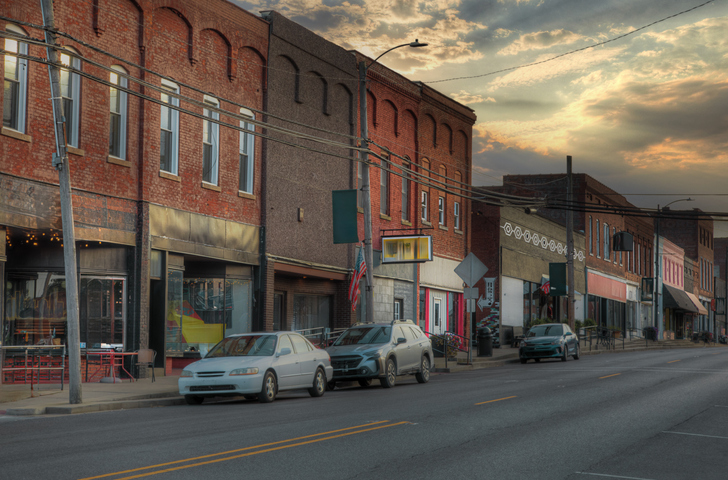
Perhaps the most infamous, locals say “ANNA” stood for “Ain’t No N****** Allowed.” The town’s reputation as a sundown town dates back over a century. Census details obtained by History and Social Justice show only 44 Black people were living in Anna around 1870, but that number quickly diminished to 0 by 1880 and remained that way for almost two decades until around 1909.
A newspaper article from the Carbondale Free Press, which was cited by the outlet, featured a resident who spoke about the outright disdain that white people living in Anna had for Black folks.
“The feeling against Negroes is high here. The town has one Black family. The large stone quarry here has some thirty or forty negroes employed,” the article, written in 1909, read. “They will be warned to leave the vicinity. If the blacks remain, it is feared trouble will occur.”
If Black people did step foot into town, they were told “not [to] let the sun set on their Black heads,” History and Social Justice noted.
2. Marion, Indiana
Marion is notorious for the 1930 lynching of two Black teenagers, Thomas Shipp and Abram Smith, on Aug. 7, 1930. The 19-year-olds were publicly lynched in the town’s courthouse square while crowds of white residents watched the horrific act take place, according to the Equal Justice Initiative.
They were hanged due to accusations that they were involved in the murder of a white man and “sexual impropriety against a white woman,” the outlet noted.
Marion remained hostile to Black residents for decades afterward.
3. Cicero, Illinois
Cicero has a well-documented history of being a sundown town. A suburb of Chicago, Cicero made headlines in 1951 when a white mob attacked a building where a Black family tried to move in.
According to Cicero Independiente, in the summer of 1951, Harvey Clark Jr., a Black bus driver from Chicago, rented an apartment in Cicero, Illinois. At the time, Cicero was a predominantly white sundown town where Black people were often harassed or attacked after dark.
When the Clark family attempted to move in, Cicero police blocked their entry and threatened to arrest them. The Clarks sued the police department, and a court later ruled that they must be allowed to move in and receive protection from anyone trying to force them out.
On July 11, 1951, the Clark family moved in under court order. That same day, a white mob of up to 4,000 people gathered. They threw the Clarks’ belongings out of a third-story window, set them on fire, and tried to burn down the building. As recorded in Cicero Revisited from the Images of America series, one woman in the crowd told a reporter, “They’re doing exactly right. They’re only protecting our homes.”
4. Appleton, Wisconsin
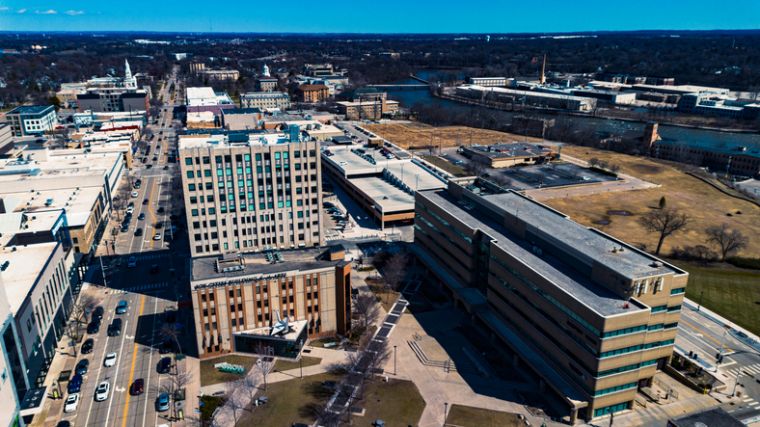
Appleton has had a long reputation for being unwelcoming to Black residents and visitors, with few Black families living there well into the 21st century. One resident told History and Social Justice, “It is my understanding that until around 1954, Appleton, WI, had an ordinance prohibiting ‘negroes’ from living within the city limits.”
Census data shows that only five Black families were living in Appleton in the 1950s, a significant drop from 18 families in 1900.
5. Darien, Connecticut
Frequently cited in studies of exclusionary zoning and racial segregation, Darien was notorious for excluding not only Black residents, but Jewish residents as well in the 1920s.
According to EBSCO, several community groups in the area asked homeowners not to sell to Jews, “while some realtors vowed not to meet with anyone whose name suggested they were Jewish.” Like Black folks, Jewish visitors were not allowed to be in the city after sundown.
6. Levittown, New York
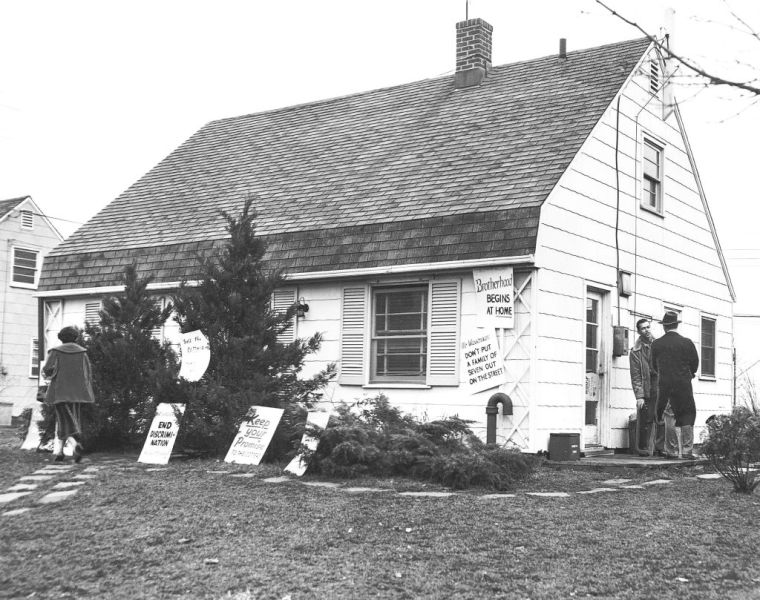
This postwar suburb was built with racial exclusion in mind. Black families were denied the opportunity to buy homes in the area for years due to discriminatory housing policies.
Giorgio Angelini, the director of Owned: A Tale of Two Americas, detailed Levittown’s difficult history of redlining in his 2022 documentary. During an interview with MetroFocus that year, the filmmaker revealed how laws were specifically written in “lease to own contracts,” excluding Blacks and other minority groups from owning property there. Angelini explained that the laws prohibited many excluded community members from building generational wealth for their families post depression era.
“You have a situation where there’s a huge demand for housing coming out of World War II,” he explained. “The government creates a series of ambitious proposals to invigorate the economy. They had to pump up the economy in a way to prop it up. They did that through housing. It really worked, but also for only a particular group of people.”
7. La Crosse, Wisconsin
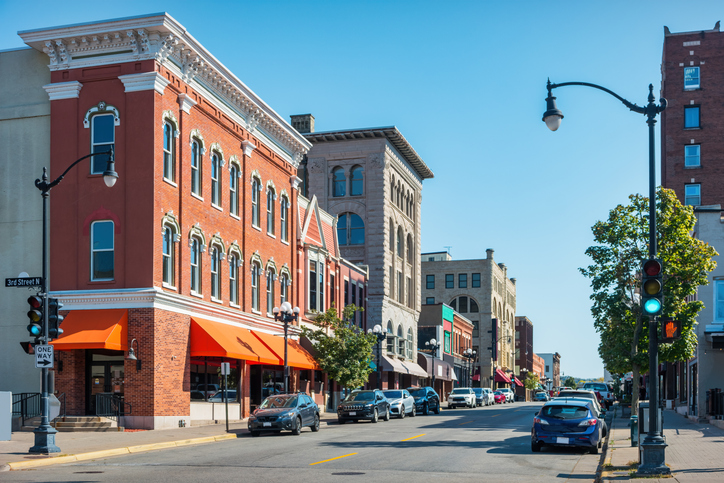
For much of the 20th century, La Crosse maintained an overwhelmingly white population. From 1852 to 1906, the city’s Black population hovered between just 1–2%, according to the La Crosse Public Library. Between the 1910s and 1990s, the Black population dropped to below 0.007%.
In 1980, the U.S. Census listed La Crosse as the fifth whitest metropolitan area in the country. Historians attribute this demographic pattern to widespread anti-Black racism. In 1922, The La Crosse Tribune reported that the Ku Klux Klan had 500 members stationed in the city, adding to the anti-black sentiment in the area.
To make right for past harms, on Dec. 8, 2016, La Crosse’s mayor and former mayor signed a resolution formally acknowledging the city’s history as a sundown town and committed to moving beyond the city’s dark legacy.
8. Mena, Arkansas

Mena openly marketed itself as a sundown town. In early 20th-century postcards promoting the area, the town used the slogan:
“Cool Summers, Mild Winters, No Blizzards, No Negroes.”
This blunt and racist messaging made clear that Black people were not welcome in the community.
9. Maryville, Missouri
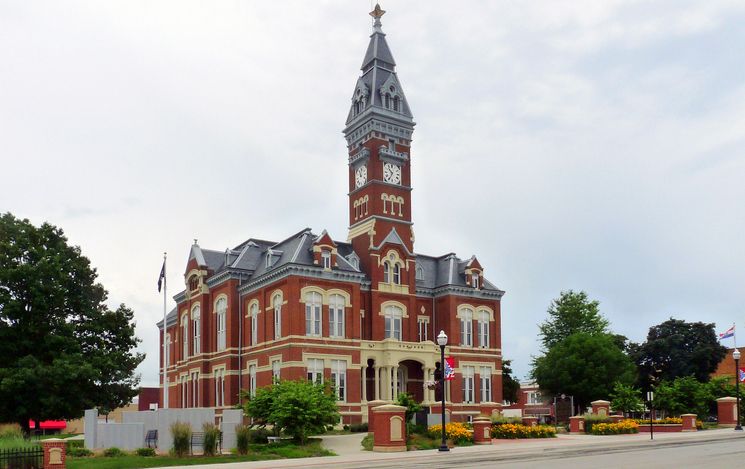
As late as 1958, Maryville’s leaders were still using racist rhetoric to promote the town to potential businesses. The chairman of the Industrial Development Corporation reportedly told a group of investors:
“We don’t have any n****** here in Maryville. We had to lynch one back in 1931… and the rest of them just up and left.”
Maryville, like many sundown towns, used this kind of violence and exclusionary practice to keep Black residents out. These towns were essentially an informal version of redlining and contributed significantly to the Great Migration, as Black families fled to cities where they could live with more safety and opportunity.
10. Vidor, Texas
Vidor has long carried a reputation as a haven for the Ku Klux Klan. According to CNN, Walter Diggles of the East Deep Texas Council of Governments recalls witnessing a Klan rally there during his childhood. While Vidor officials argue that Klan events brought in members from across the region, the town became closely associated with white supremacy.
One of the most notorious incidents occurred in 1993, when the federal government attempted to integrate Vidor’s public housing by moving in a small number of Black families. The Klan responded by marching through town. Within months, the Black families moved out, and the town’s racist reputation became further cemented, and they never returned. Not even to visit decades after the town became integrated.
“They think that’s a racist town,” said Diggles during a 2006 interview with CNN. “They think when you go through Vidor, you better be very careful, and most Blacks still refuse to stop.”
As part of its effort to improve its image, the Vidor school district put up a billboard featuring a Black student to promote diversity. After Hurricane Katrina, the town offered shelter to displaced African-American families.
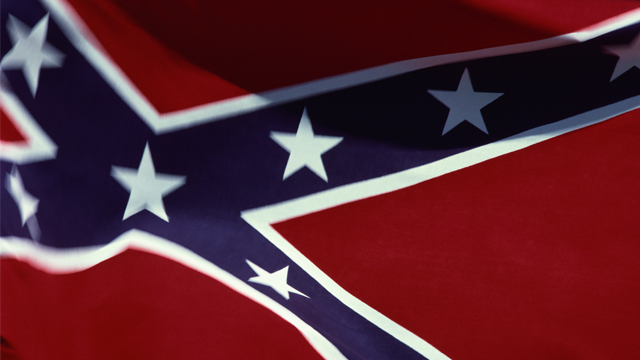
Despite these efforts, Vidor’s reputation lingers. As previously reported, a Black truck driver named Gideon recently posted a viral TikTok video in 2022, describing his experience delivering a load there. He said everyone he knew in Texas told him, ‘Do not go to Vidor.’” He went anyway, but before arriving, he saw what he described as “a doll of a Black man wrapped in a Confederate flag hanging from a tree by his neck.”
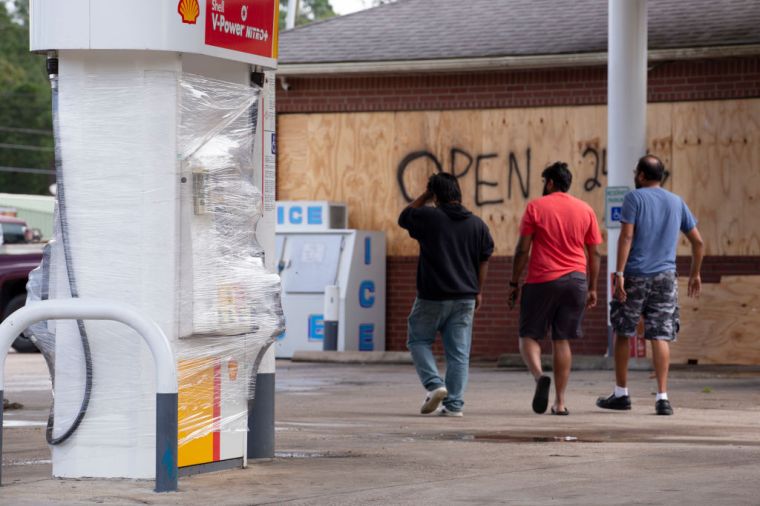
Vidor was struck by a devastating hurricane in 2020.
10 Sundown Towns That Shaped A Dark Chapter In Black American History was originally published on newsone.com