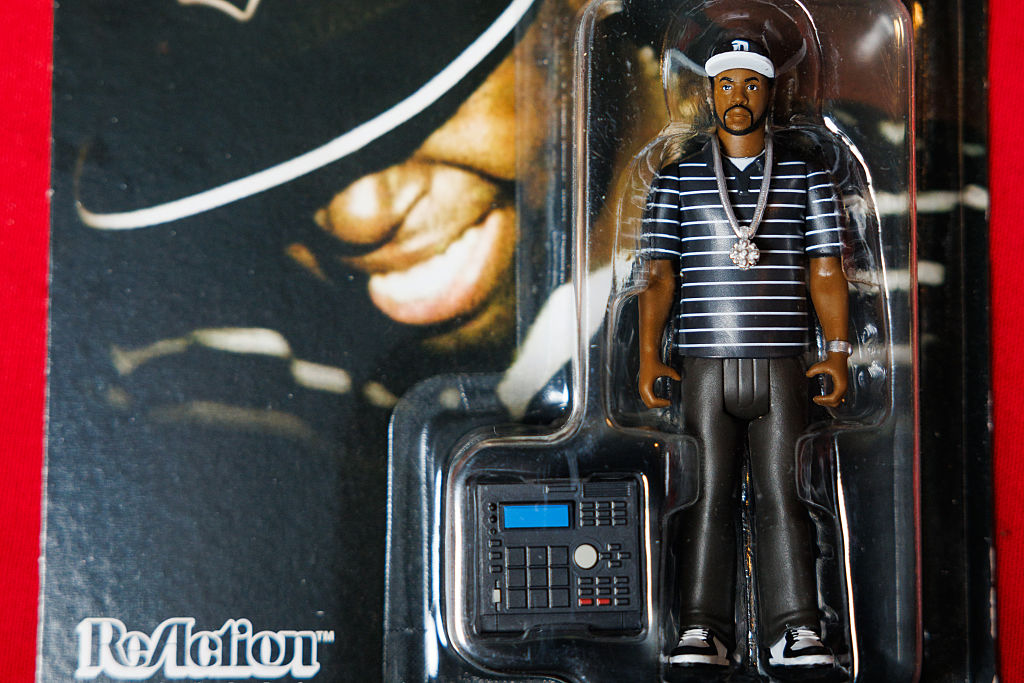
Dilla's catalog extends beyond his classics, showcasing his innovative production techniques and experimental spirit.
Dilla's minimalist, unquantized beats influenced the 'beat scene' and shaped the sound of modern R&B and hip-hop.
Dilla's music was deeply rooted in Detroit's underground scene, reflecting the city's grit and community spirit.
Source: Richard Bord / Getty
Beyond Donuts: 7 Underrated J Dilla Tracks Defining His Legacy
February carries a bittersweet weight for music lovers across Black America and the world. It is “Dilla Month,” a time when we celebrate the birth of James Dewitt Yancey on February 7, and mourn his transition on February 10, 2006. It has been 20 years since we lost the Detroit maestro, yet his heartbeat still dictates the rhythm of modern hip-hop, neo-soul, and jazz.
While we all know the classics—the soul-stirring samples of “The Light” by Common, the frantic brilliance of “Donuts,” and the smooth vibes of Slum Village—Dilla’s catalog is an ocean. Most fans stay near the shore, enjoying the hits that defined an era of the Soulquarians. But to truly understand the genius of Jay Dee, you have to wade into the deep waters. You have to find the B-sides, the remixes, and the album cuts where he experimented with time, space, and bass in ways that computer programs still can’t replicate today.
For the culture, J Dilla wasn’t just a beatmaker; he was an architect of sound who spoke to our collective soul without saying a word. As we light a candle for the 20th anniversary of his passing, let’s bypass the radio hits and celebrate the deep cuts. Here are seven lesser-known J Dilla productions that showcase the range, the grit, and the unquantized magic of the greatest to ever do it.
1. Steve Spacek – “Dollar” (2005)
Love Entertainment? Get more! Join the Black America Web Newsletter
Thank you for subscribing! Please be sure to open and click your first newsletter so we can confirm your subscription.
Toward the end of his life, Dilla began stripping sound down to its barest essentials. “Dollar,” produced for British singer Steve Spacek, is a masterclass in minimalism. If you are used to the lush, multi-layered soul samples of his early work, this track might shock you. It is sparse, cold, and undeniably funky.
The beat consists of a simple, snapping drum pattern and a synthetic bassline that feels like it’s breathing. It doesn’t follow a traditional grid; it swings in that drunken, human way that only Dilla could program. This track is crucial because it highlights his evolution. He wasn’t just the “boom bap” guy; he was pushing forward into electronic territories that would influence the “beat scene” in Los Angeles for the next two decades. It sounds like the future, even 20 years later.
2. The Brand New Heavies – “Sometimes (The Ummah Remix)” (1997)
In the mid-90s, the production collective “The Ummah” (consisting of Q-Tip, Ali Shaheed Muhammad, and Dilla) was reshaping R&B. While Q-Tip was the face, Dilla was often the hands behind the boards. This remix for the British acid jazz band The Brand New Heavies is pure, unfiltered sophisticated funk.
What makes this track a hidden gem is how Dilla transforms a pop-friendly acid jazz tune into a head-nodding anthem for the jeep. He engages Q-Tip on the vocals, but the star is the kick drum. It hits with a thud that rattles the trunk, paired with a filtered melodic sample that floats in the background. It captures that specific moment in ’97 when hip-hop and R&B were merging into a perfect union, providing the soundtrack for everything from backyard cookouts to late-night drives.
3. Phat Kat – “Don’t Nobody Care About Us” (1999)
You cannot talk about J Dilla without talking about Detroit. His loyalty to his city and its underground scene was unwavering. Phat Kat, a fellow Detroiter, was one of Dilla’s sharpest collaborators. While the world was looking at New York and LA, Dilla and Phat Kat were cooking up grime in the basement.
“Don’t Nobody Care About Us” is gritty, raw, and aggressive. It features a menacing, distorted sample that loops relentlessly, creating a feeling of urgency. This isn’t the “smooth” Dilla; this is the Dilla who grew up in Conant Gardens. The production mirrors the frustration and the hustle of the inner city. It serves as a reminder that before he was a global icon celebrated in museums, he was a local hero making beats for his friends to rap on. The track is a testament to community and the raw energy of Detroit hip-hop.
4. Busta Rhymes – “So Hardcore” (1998)
Busta Rhymes and J Dilla had a special chemistry. Busta’s animated, high-energy flow needed a producer who could match his intensity without cluttering the sonic space. While “Woo Hah!! Got You All in Check” (Remix) is famous, “So Hardcore” is the fan favorite that often slips under the mainstream radar.
The genius here lies in the “chop.” Dilla takes a sample and slices it so finely that it becomes a new instrument entirely. The bassline creates a pocket that forces you to move your neck. It’s dark, cinematic, and heavy. This track exemplifies Dilla’s ability to cater to the artist. He gave Busta exactly what he needed: a beat that sounded like a monster stomping through the city. It’s hard, unapologetic, and undeniably Black.
5. Janet Jackson – “Got ’Til It’s Gone (Ummah Jay Dee’s Revenge Remix)” (1997)
We all know the original “Got ’Til It’s Gone” featuring Q-Tip and Joni Mitchell. It’s a classic. But the “Jay Dee’s Revenge Remix” is where the real heads live. There has always been industry folklore about who produced the original track, but on this remix, Dilla leaves no doubt about his signature sound.
He strips away the acoustic, folk-leaning vibe of the original and replaces it with a bouncing, synthesized bassline and crisp, snapping snares. He re-harmonizes the track, giving Janet’s vocals a warmer, more soulful context. This remix is a prime example of Dilla’s crossover appeal. He could take a global pop superstar and give her street credibility without compromising her elegance. It’s a smooth operator that deserves way more rotation at our family reunions.
6. De La Soul – “Thru Ya City” (2004)
By 2004, De La Soul was fighting to maintain their artistic integrity in a changing industry. Enter J Dilla. On their album The Grind Date, Dilla provided “Thru Ya City,” a track that sounds like a celebration.
The beat is built around a joyous piano loop and a vocal sample that feels like a block party. It’s infectious. But listen closely to the drums. The kick drum is slightly late, and the hi-hat is slightly early. It creates that signature “Dilla Swing” that makes you want to dance even though the rhythm feels loose. This track represents the joy Dilla brought to the game. Even as his health began to decline during these years, his music remained vibrant and full of life. It’s a feel-good anthem that highlights the resilience of the Native Tongues era.
7. Bilal – “Reminisce” (2001)
Dilla’s influence on the Neo-Soul movement is undeniable, and his work with Bilal on the album 1st Born Second is essential listening. “Reminisce” features Mos Def and Common, but the production is the glue that holds these titans together.
The track is hazy, dreamy, and jazz-inflicted. Dilla uses a filtered bassline that sounds like it’s underwater, creating a psychedelic soul atmosphere. It’s the perfect backdrop for Bilal’s eccentric vocal stylings. This production shows Dilla as the conductor of a mood. He wasn’t just making a beat; he was painting a picture. It captures the essence of early 2000s Black creativity—experimental, rooted in jazz, and fearlessly emotional.
The Legacy Lives On
Twenty years later, James Yancey remains a guiding light. We hear his influence in the lo-fi beats that students study to, in the complex rhythms of modern jazz drummers, and in the sampling techniques of today’s top producers. He taught us that it’s okay to be imperfect, that there is soul in the mistakes, and that the space between the notes is just as important as the notes themselves.
As we navigate this 20th anniversary, let’s keep his name alive not just by wearing the t-shirts, but by listening to the music. Share these lesser-known tracks with a friend. Play them for the younger generation. Dilla’s music is a cultural heirloom, and it is our responsibility to pass it down.
Rest in Power, J Dilla. Your music is still the light.